
Climate change is often described through distant images: melting ice, future scenarios, long-term projections.
But the latest indicators tell a different story.
The climate signal is no longer distant. It is measurable, current and accelerating.
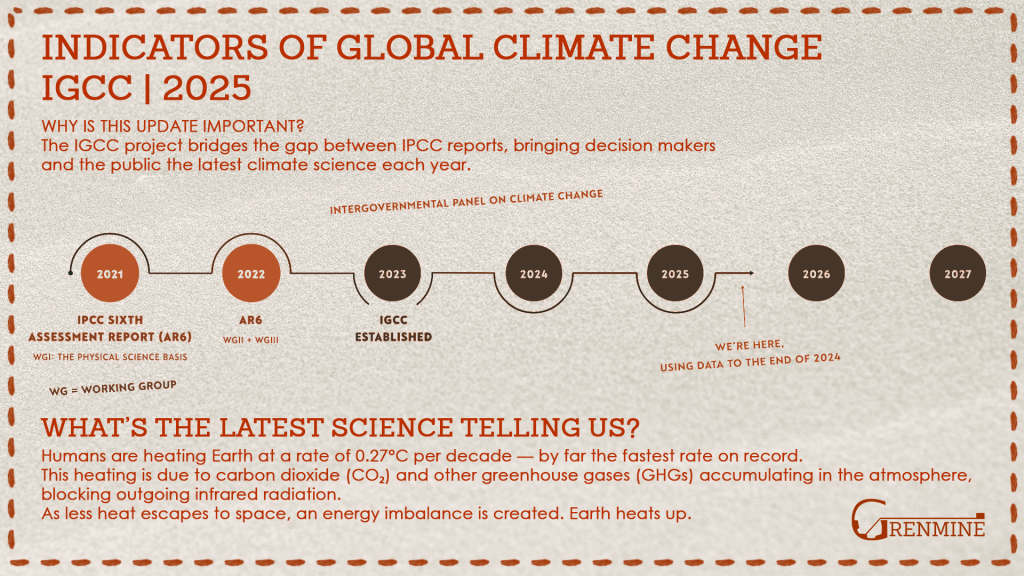
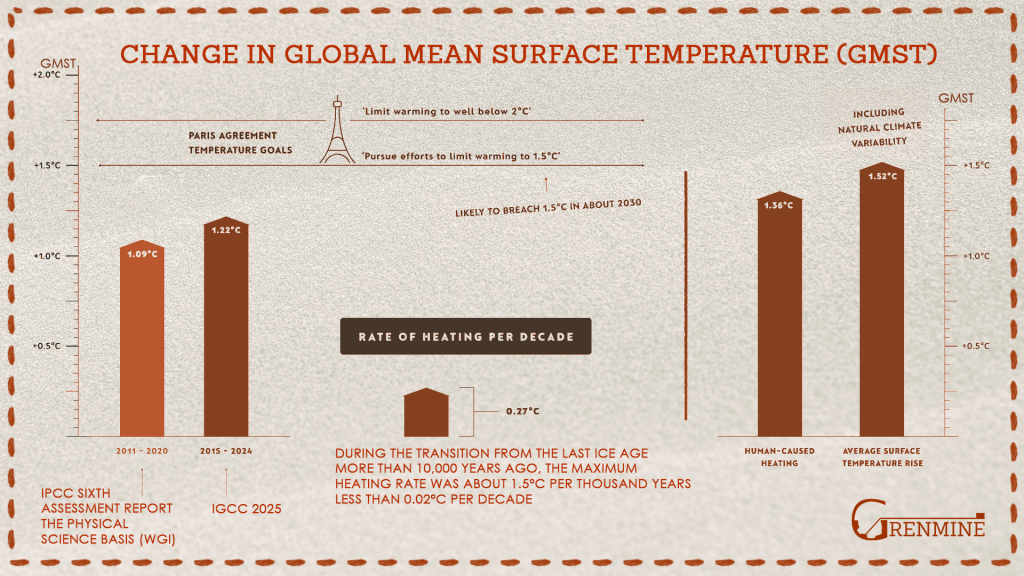
According to the latest Indicators of Global Climate Change update, human-induced warming is now increasing at a rate of around 0.27°C per decade. The observed global surface temperature rise in 2024 reached an estimated 1.52°C above pre-industrial levels, while the human-caused component was estimated at 1.36°C.
This distinction matters.
A single year above 1.5°C does not mean the Paris Agreement threshold has formally been breached. Climate targets are assessed over longer-term averages. But it does show how close the world is to the limit that climate science, policy and society have been discussing for years.
The numbers are no longer theoretical. They are becoming operational.
The carbon budget is shrinking
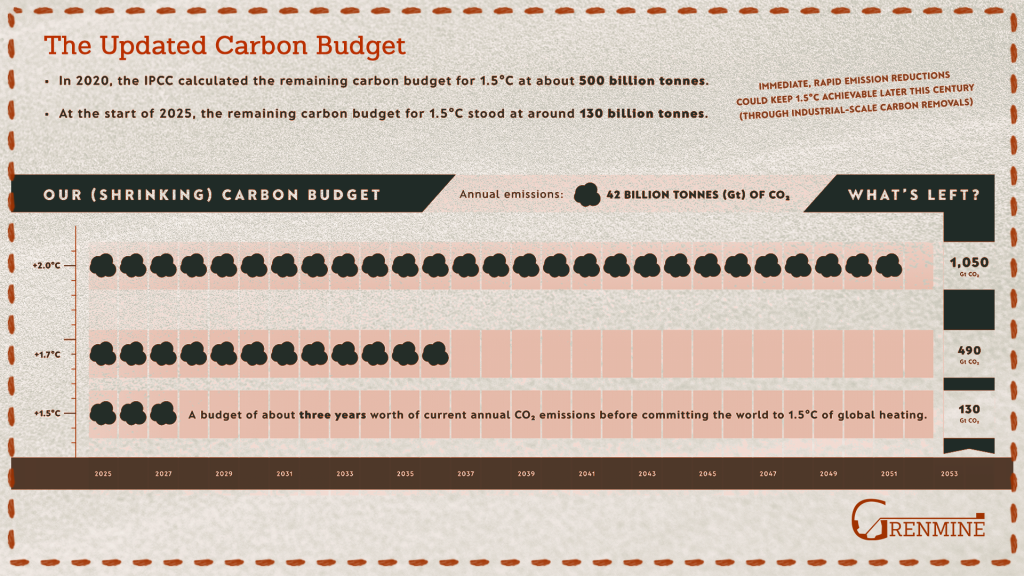
In 2020, the remaining carbon budget for limiting warming to 1.5°C was estimated at around 500 billion tonnes of CO₂. At the start of 2025, that budget had fallen to around 130 billion tonnes.
At current levels of emissions, this is roughly equivalent to only a few years of global CO₂ output.
This is the uncomfortable message behind the updated carbon budget: the energy transition is not only about direction. It is about speed.
Reducing emissions gradually is no longer enough. Energy systems must change quickly, while still remaining reliable, affordable and secure.
That is the central challenge. The world needs to decarbonise without destabilising the systems people depend on every day.
Emissions are still too high
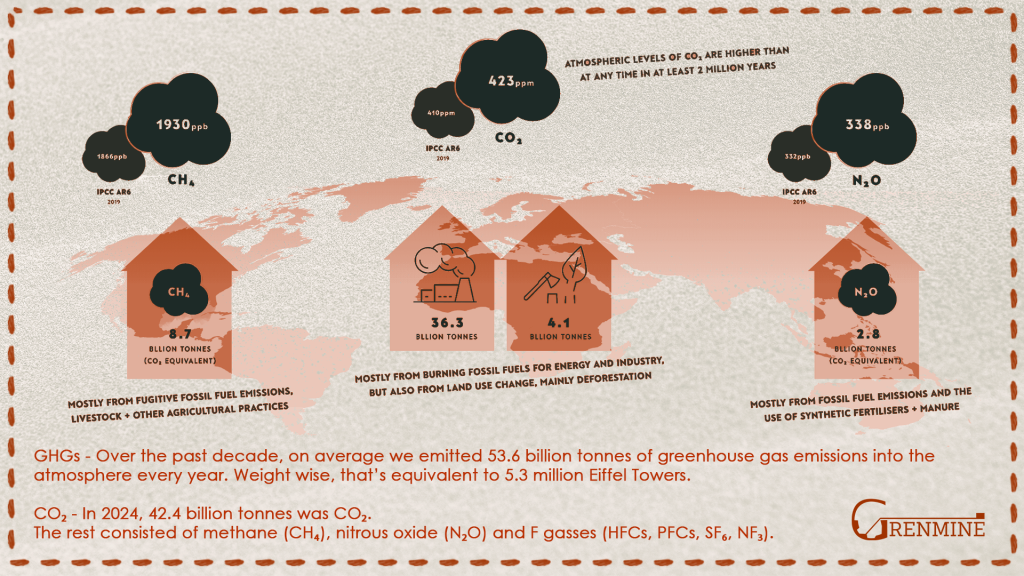
Over the past decade, global greenhouse gas emissions averaged around 53.6 billion tonnes of CO₂ equivalent per year.
In 2024, carbon dioxide emissions alone reached around 42.4 billion tonnes. Most of these emissions came from burning fossil fuels for energy and industry, with additional contributions from land-use change, agriculture and other greenhouse gases such as methane and nitrous oxide.
This is where the climate discussion becomes an energy discussion. Because the atmosphere does not respond to ambition. It responds to accumulated emissions. And emissions are shaped by the way electricity, heat, mobility and industry are powered.
Why energy storage matters
Renewable energy is central to decarbonisation. Wind and solar power can reduce dependence on fossil fuels and lower emissions from electricity generation.
However, renewable energy also changes the logic of the grid. Electricity is not always produced at the same time it is needed. A windy night can generate surplus power. A calm evening can create pressure on the system. A sunny afternoon can flood the grid, while demand may peak later.
This is why the transition is not only a generation challenge. It is also a timing challenge. Energy storage helps close that gap. It allows surplus energy to be stored when production is high and released when demand rises. It can support grid stability, reduce curtailment and improve the use of renewable electricity.
In other words, storage makes clean energy more usable.
The role of gravity energy storage
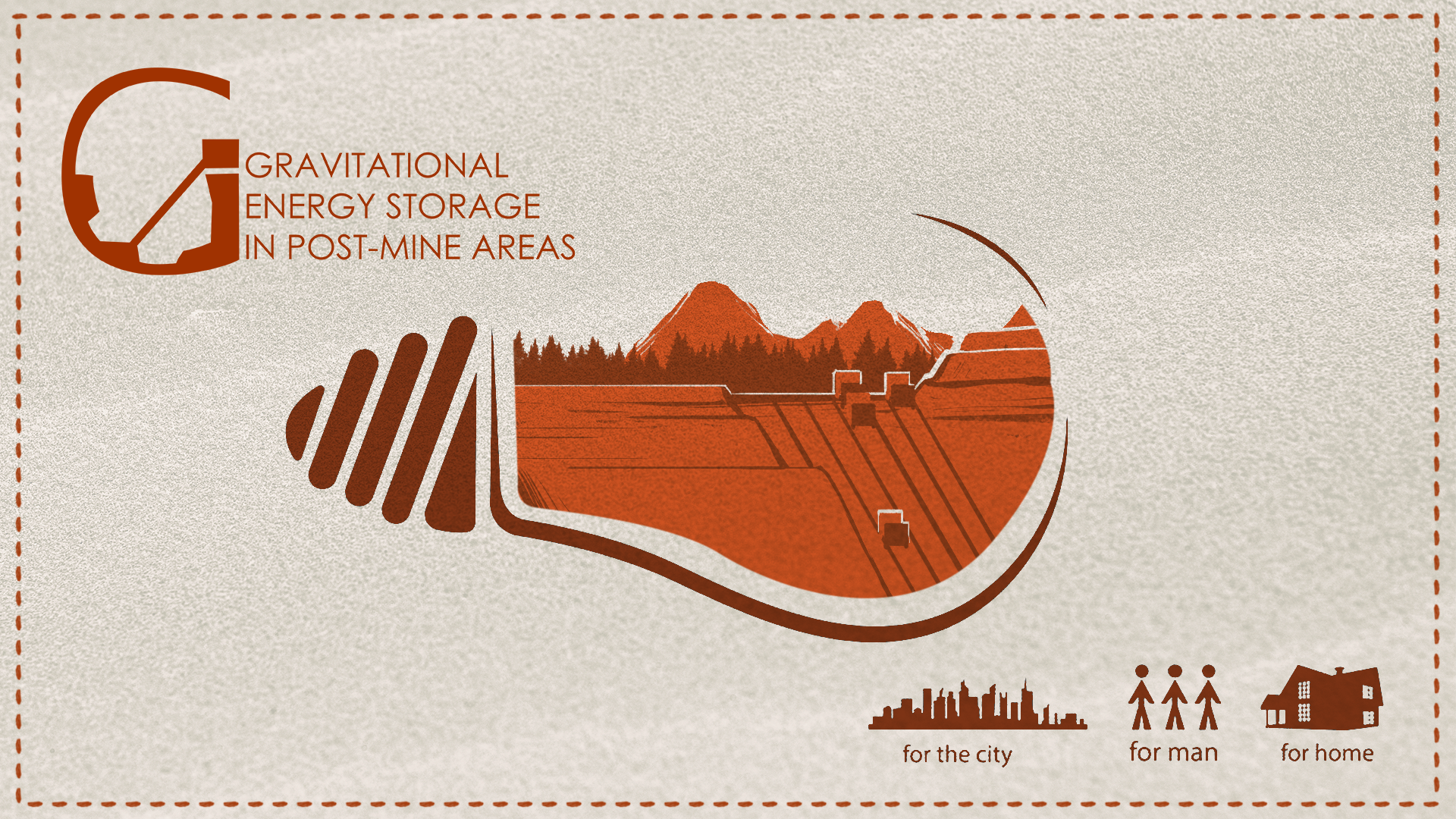
GrEnMine explores gravitational energy storage in post-mining areas.
The idea is based on a simple physical principle: when energy is available, heavy masses can be lifted. When energy is needed, those masses can be lowered, converting stored potential energy back into electricity. The concept is simple. The engineering is not.
Designing such systems requires careful analysis of site conditions, geotechnical stability, energy performance, safety, environmental impact and economic feasibility.
Post-mining areas are particularly relevant because they already carry industrial histories, existing infrastructure and local communities facing transition. Instead of treating these regions only as landscapes of extraction, GrEnMine investigates whether they can become part of the future energy system. Not by erasing their past, but by giving them a new function.
From climate indicators to infrastructure decisions
The latest climate indicators do not only tell us that the planet is warming.
They tell us that time has become a design constraint.
Every new energy investment, industrial project and grid development now sits inside a shrinking carbon budget.This makes energy infrastructure more important than ever.
The question is no longer only how much renewable energy can be generated. The question is also how effectively that energy can be stored, balanced and delivered when society needs it. That is where projects such as GrEnMine become relevant. Moreover, the energy transition will not be achieved by generation alone.
It will require systems that can absorb volatility, support resilience and make renewable energy available at the right moment. Climate change is accelerating. The carbon budget is shrinking.
The grid must become more flexible, and storage is becoming one of the key technologies that can help turn climate ambition into operational reality.