
You do not simply place a 100-ton mass on the ground and hope for the best.
When gravitational energy storage systems rely on controlled mass movement, the terrain becomes part of the engineering system. If gravity is the battery, the ground is the foundation.
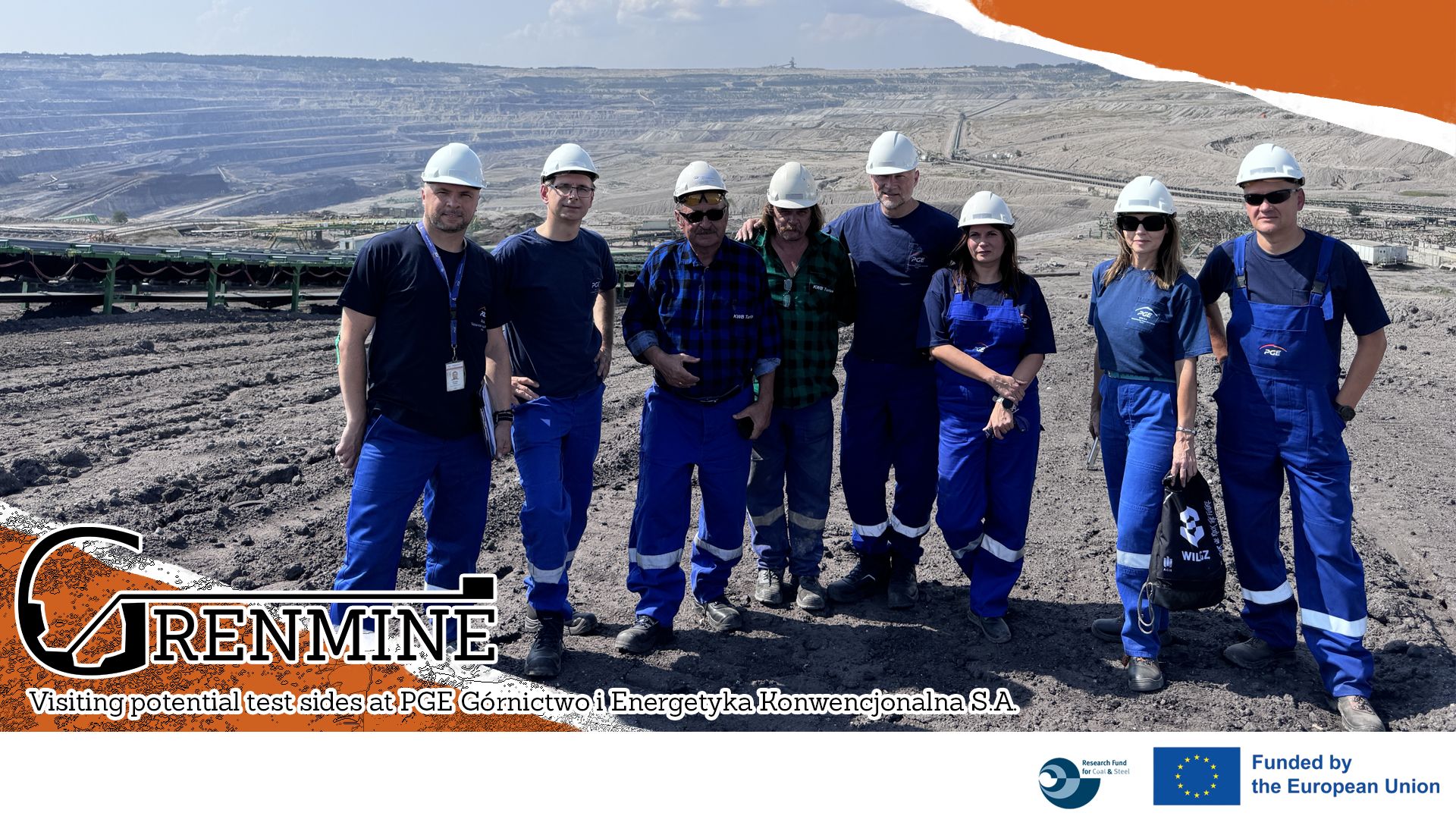
Within the GrEnMine project, comprehensive geotechnical simulations are being conducted to assess whether open-pit slopes and overburden dumps can safely support the weight and dynamic motion of a rail-mounted gravitational energy storage system.
The work is led by Professor Marek Cała and Agnieszka Stopkowicz from AGH University of Krakow. Their team evaluates the structural stability of real post-mining sites in Poland, including areas operated by PGE Górnictwo i Energetyka Konwencjonalna S.A.
The objective is precise:
Can existing mining terrain withstand repeated static and dynamic loads generated by large moving masses?
To answer this, the team performs advanced modelling and simulation, analysing:
- stress distribution,
- deformation patterns,
- slope stability under cyclic loading,
- potential long-term ground response.
No rail will be installed before the data confirms structural resilience.
GrEnMine does not rely on assumptions. It relies on calculations.
Because storing renewable energy through gravity only works if the land holds the line.
The question is not only whether the terrain is stable.
It is how much movement it can absorb—before it pushes back.