
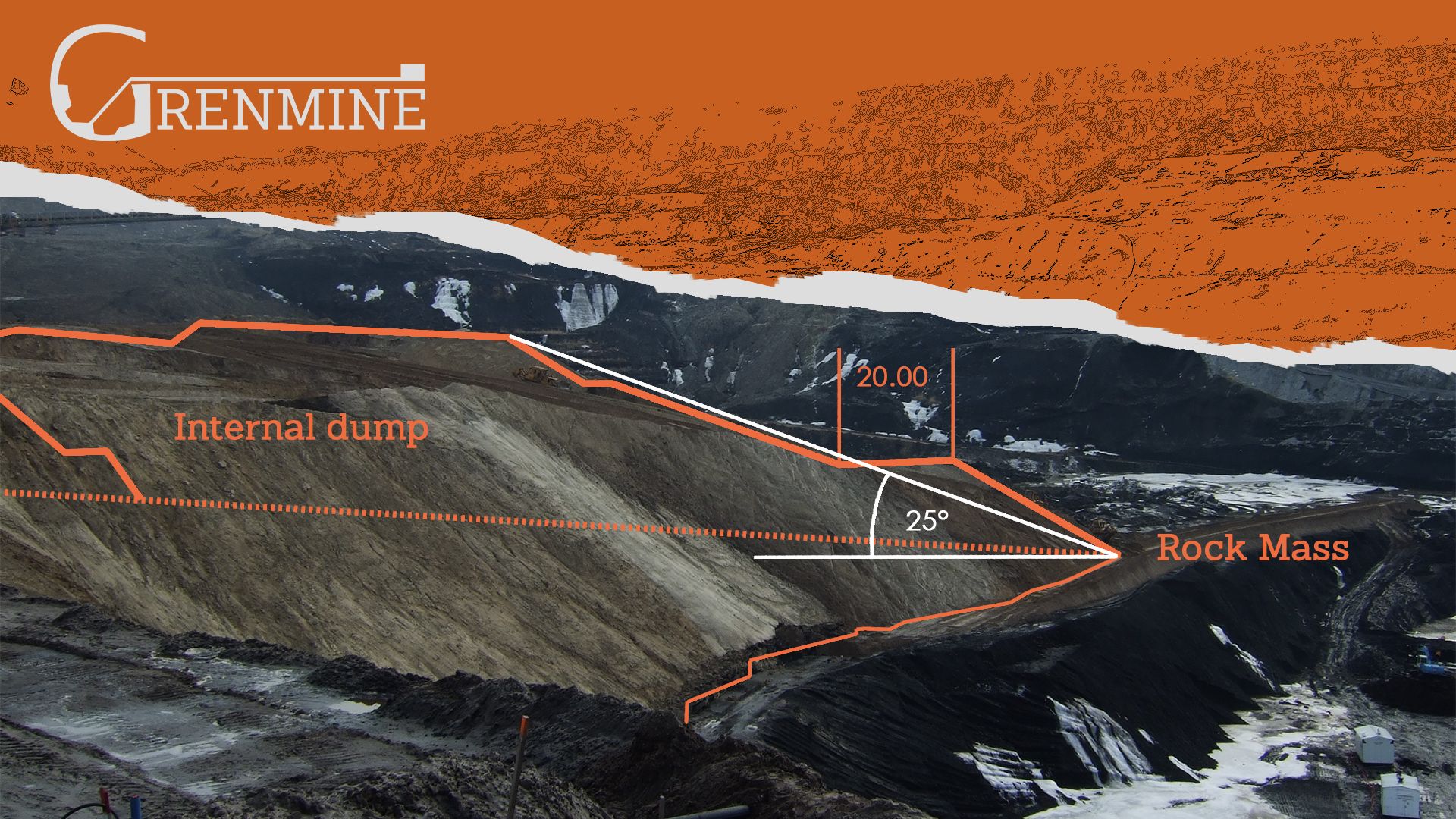
A project focused on gravitational energy storage is currently underway, including the construction of a demonstrator and the assessment of the technology’s full potential.
The Energy of Tomorrow – Rooted in a Mining Past
Wrocław University of Science and Technology is coordinating a project that may redefine how Europe approaches energy storage.
GrEnMine is an international research and implementation initiative co-funded by the Research Fund for Coal and Steel. Its objective is to develop and test gravity-based energy storage systems. This is the first initiative of its kind in Poland and one of the few in Europe that combines cutting-edge energy technology with the redevelopment of post-mining areas.
Conceptual, engineering, and fieldwork activities are already underway at various stages of advancement. The project aims to design a gravitational energy storage technology, construct a working demonstrator, and evaluate the overall potential of this solution. The system is designed to support renewable energy-based electricity grids by storing and releasing energy through the controlled movement of masses between different elevation levels. In the future, such solutions may play a significant role in stabilizing energy generated from renewable sources.
Gravity as a Tool for the Energy Transition
GrEnMine (Gravitational Energy Storage in Post-Mine Areas) addresses the increasingly visible challenge of energy instability associated with the growing share of renewable energy sources—particularly wind and solar power.
The RM-GES (Rail-Mounted Gravitational Energy Storage) technology, developed by a research team at Wrocław University of Science and Technology, relies on moving masses vertically—upwards and downwards—to store and release electrical energy.
“Energy storage is one of the key challenges in an era of increasing reliance on renewable, inherently less stable energy sources. The task we have undertaken is complex—it requires precise calculations, advanced simulations, and structures capable of withstanding extreme loads. However, we are fully prepared for this challenge.” – says Prof. Przemysław Moczko, Project Leader from the Faculty of Mechanical Engineering at WUST.
“GrEnMine is not just about technology—it is also about giving new purpose to areas that have served extraction activities for decades. Now they can serve the economy again—this time in a different way.”
The Role of Wrocław University of Science and Technology
Within the GrEnMine project, Wrocław University of Science and Technology plays a dual role: it coordinates the international consortium and serves as the main centre responsible for designing and developing the core RM-GES technology.
The research team from the Faculty of Mechanical Engineering conducts advanced engineering work, including system conceptualisation, mechanical calculations, simulation analyses, and planning for full integration of the technology in real-world conditions. Cooperation with industrial partners, including PGE Górnictwo i Energetyka Konwencjonalna S.A., will enable the construction of a demonstrator at a selected open-pit mine site.
Thanks to its multidisciplinary expertise and technological infrastructure, Wrocław University of Science and Technology is the backbone of the project, ensuring both scientific coherence and effective implementation of the solutions developed within GrEnMine.
A Project with Implementation Potential
GrEnMine is more than a research project—it represents a potential deployment model for a new class of energy storage systems in regions that most urgently require a technological impulse for transformation.
The initiative also has environmental and infrastructure significance: it may support the redevelopment of post-industrial areas, create new jobs, and help reduce the energy sector’s carbon footprint.
The project will run until June 2027. Its outcomes will include not only a functioning technology demonstrator but also a ready-to-implement model that can be scaled and adapted to other regions across Europe.