
Net zero is not one thing
Climate action has developed a language problem. Emission reduction. Carbon neutral. Net zero CO₂. Net zero greenhouse gases. Climate positive. The terms are often used as if they meant the same thing.
They do not.
Some describe emitting less. Others describe balancing what is still emitted. Some rely on carbon removals. And behind all of them sits a much more practical question: what must actually change in the systems that power our economies?
First, reduce what enters the atmosphere
The most important distinction is also the simplest. Avoiding an emission is not the same as compensating for one after it has occurred.
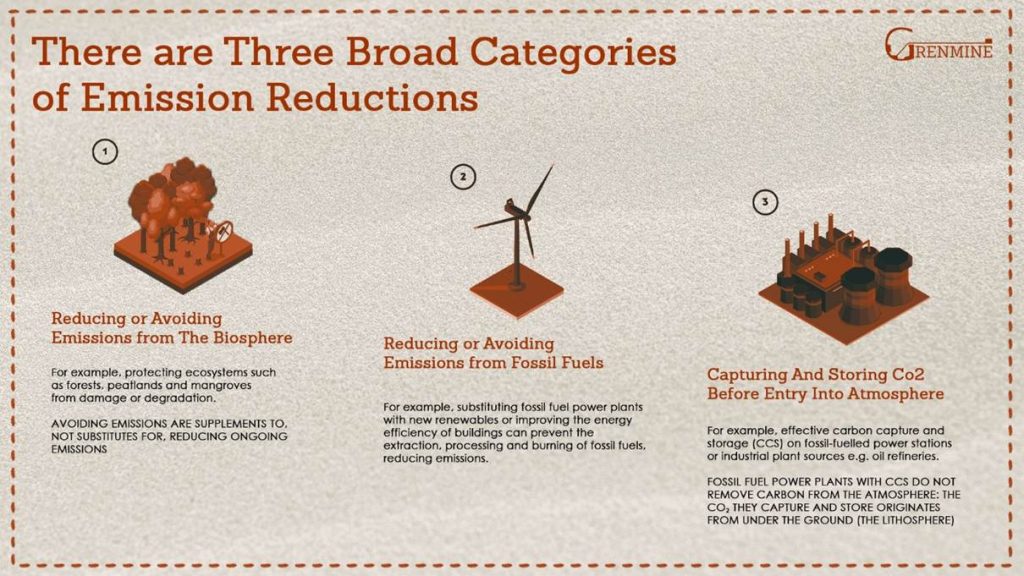
Climate action can reduce emissions in several ways. We can protect natural systems that already store carbon, reduce fossil-fuel emissions by changing how energy is produced and used, or capture CO₂ before it reaches the atmosphere.
All three can matter, but they are not interchangeable.
Protecting a forest does not make unlimited fossil-fuel emissions harmless. Capturing carbon is not the same as never producing the emission. And buying an offset does not physically transform the system that caused it.
The climate vocabulary needs untangling
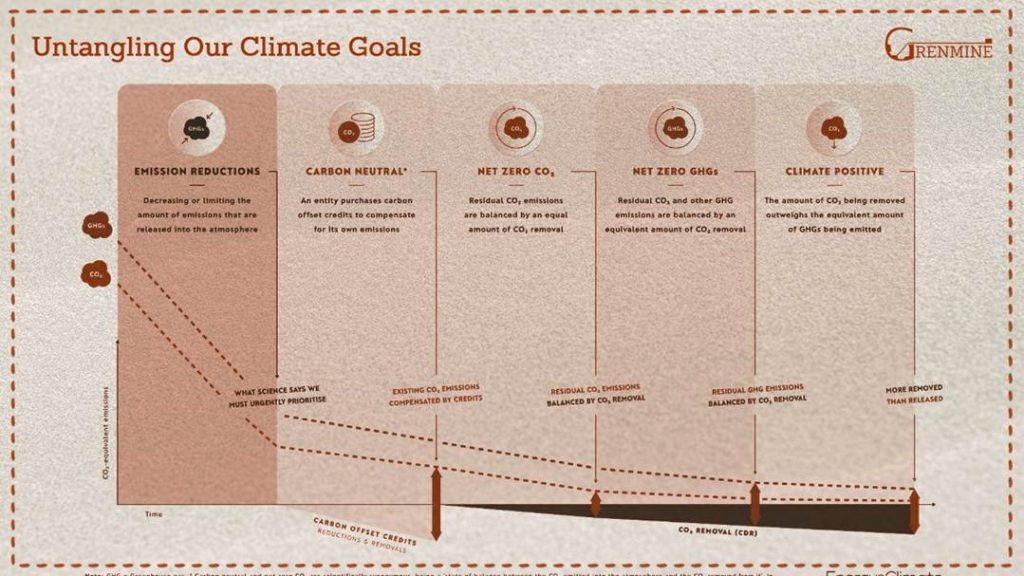
Emission reduction, carbon neutrality and net zero describe different physical realities.
- Emission reduction means less greenhouse gas is released.
- Carbon neutral usually means emissions are compensated for, often through credits or offsets.
- Net zero CO₂ means remaining emissions are balanced by an equivalent amount of durable CO₂ removal.
- Net zero greenhouse gases extends that balance beyond carbon dioxide.
- Climate positive means more greenhouse gases are removed than emitted.
The problem begins when these terms are treated as branding categories rather than physical conditions. A company may have a beautifully designed net-zero roadmap.
The atmosphere receives molecules, not PowerPoint slides.
Net zero is a balance, not a disappearance
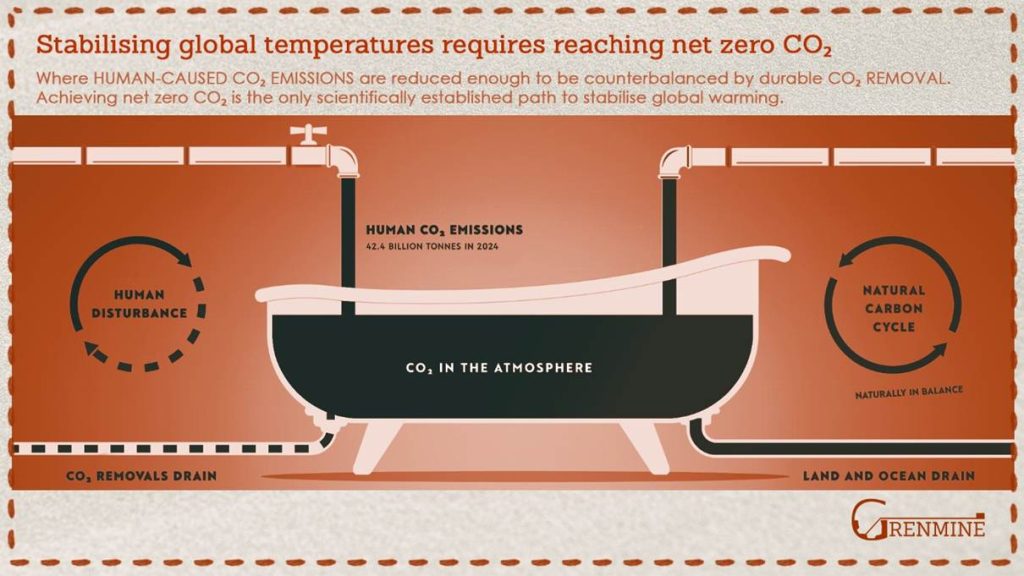
Think of the atmosphere as a bathtub. Human activity turns on one tap. Natural systems absorb part of the flow. Carbon removal may create an additional drain. As long as more CO₂ enters than leaves, the level rises. That is why net zero does not mean zero industry, zero activity or zero emissions from every source.
It means reducing human-caused CO₂ emissions enough for the remainder to be counterbalanced by durable removals. The bathtub does not care that one tap has been painted green.
It only responds to the balance.
Timing matters
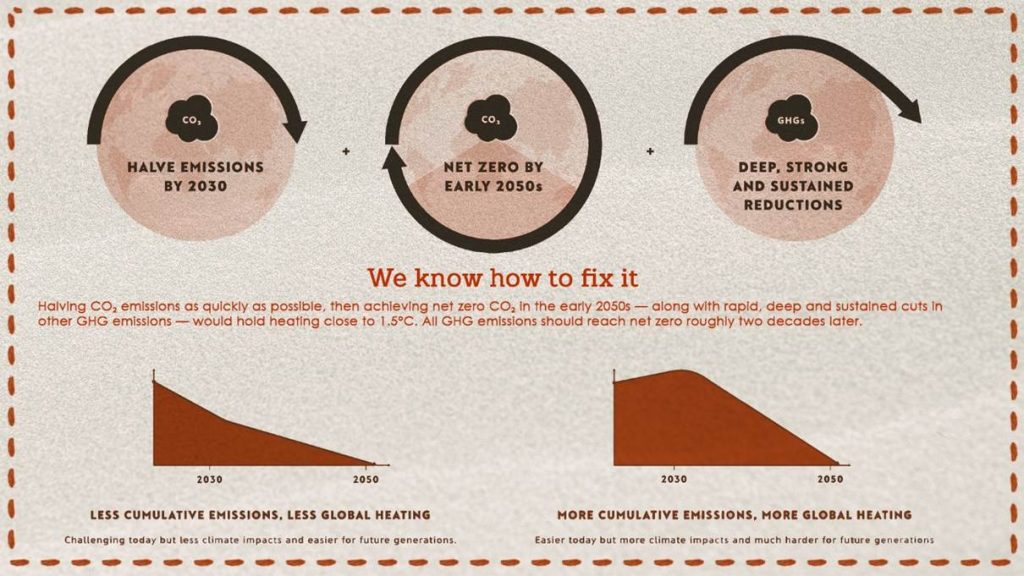
Two economies can promise the same net-zero date and still produce very different climate outcomes. One cuts emissions deeply now. The other waits for decades and drops sharply near the deadline. The destination may look similar, however, the cumulative emissions do not. A late solution can still create a much larger problem on the way there. That is why the path to net zero matters almost as much as the target itself.
Eventually, every climate target becomes an infrastructure question
Reducing emissions is not simply about closing high-emission infrastructure. It is about replacing the services that infrastructure provides. Factories need electricity. Hospitals need it. Homes, transport systems and digital infrastructure need it.That demand does not disappear when the energy source changes.
More renewable generation is essential. But generation alone is not the whole system.Solar and wind produce when conditions allow. Economies consume when they need to.
That gap creates a simple question:
where does the energy wait?
This is where storage becomes part of the climate discussion. It is where projects such as GrEnMine become relevant.
Giving energy somewhere to wait
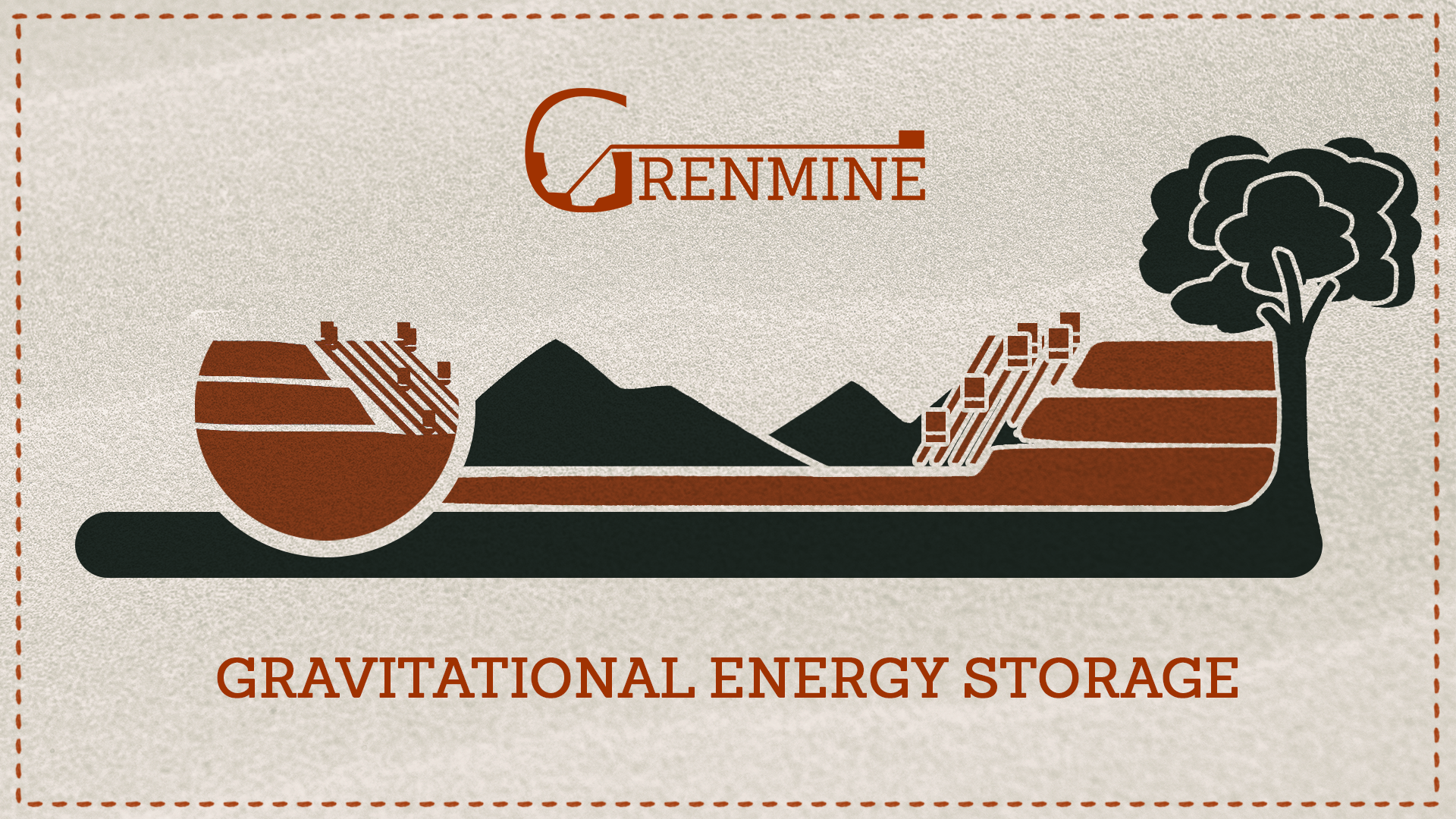
GrEnMine explores the potential use of post-mining areas for gravitational energy storage.
The principle is physical: energy available at one moment can be used to raise mass. When the system needs that energy later, gravity helps release it again.
The potential benefits include:
- supporting grid stabilisation,
- helping integrate renewable generation,
- improving energy resilience,
- and giving post-mining areas a possible new role in the energy system.
GrEnMine is not based on the idea that one technology will solve climate change. The more serious idea is that a lower-emission system will need a portfolio of physical solutions. Some landscapes built for one economic era may still have a role in the next.
Net zero is not a communications target
A declaration cannot replace a power system. An offset cannot replace every avoided emission. A renewable generator cannot guarantee electricity at every moment. A net-zero target cannot succeed without the infrastructure needed to make deep emissions reductions possible.
That infrastructure includes generation, grids, efficiency, industrial change and storage. Because the real challenge is not simply to produce cleaner energy.It is to build a system that can use it, move it and make it available when society actually needs it.
The climate vocabulary may be complicated. The underlying question is not:
What do we call the target?
It is:
What must we physically build to reach it?