
Replacing fossil fuels with renewables is only the beginning. The harder task is redesigning the system around them.
The energy transition is often described through objects. Solar panels. Wind turbines. Heat pumps. Electric vehicles.The more of them we install, the closer we move towards a cleaner energy system.
A collection of cleaner technologies does not automatically create a functioning energy system. A solar panel can generate electricity. A heat pump can use it. An electric vehicle can replace a combustion engine.
None of them answers the questions that keep the system running.
- Where is the electricity produced?
- When is it available?
- Can the grid carry it?
- What happens when production and demand do not meet?
That is why the transition is not simply about replacing old technologies with new ones. It is a redesign of the relationships between them.
The system is what happens between the technologies
For decades, electricity systems were built around large power plants that could adjust generation to demand.
Renewables change that logic. Solar follows the sun. Wind follows the weather.
Demand follows neither. Factories work according to production schedules. People return home in the evening. Heating demand rises when temperatures fall. Data centres operate continuously.
A modern energy system therefore has to coordinate technologies that follow very different rhythms.
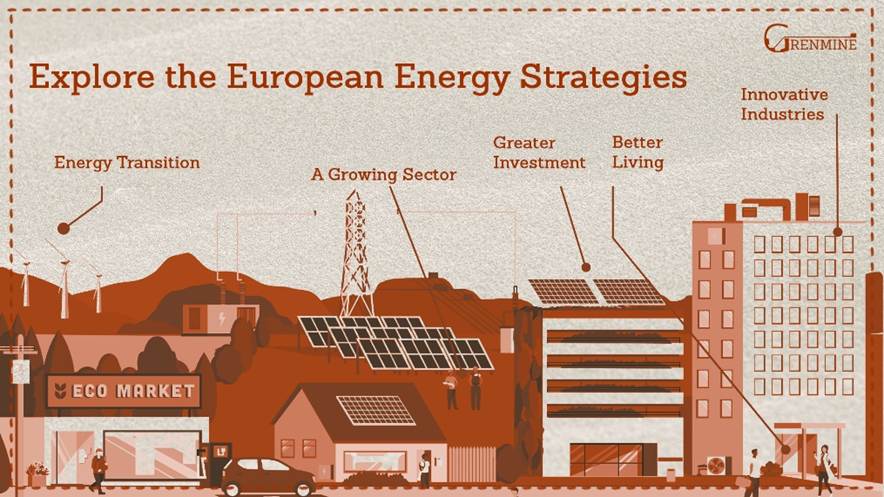
This is why Europe is not simply replacing one fuel with another.
The transition affects electricity, transport, heating, industry, buildings and infrastructure.
The useful question is no longer only: What technology are we installing?
A better one is: What does that technology need around it to work well?
A solar installation needs a grid. A heat pump changes electricity demand. An electric vehicle can create new peaks in consumption. A wind farm may produce electricity when the local network cannot use all of it. The system is what happens between these technologies.
Clean energy still has a timing problem
Imagine a city with solar panels, heat pumps, hydropower and smart energy management. At first glance, it looks like a picture of technologies.
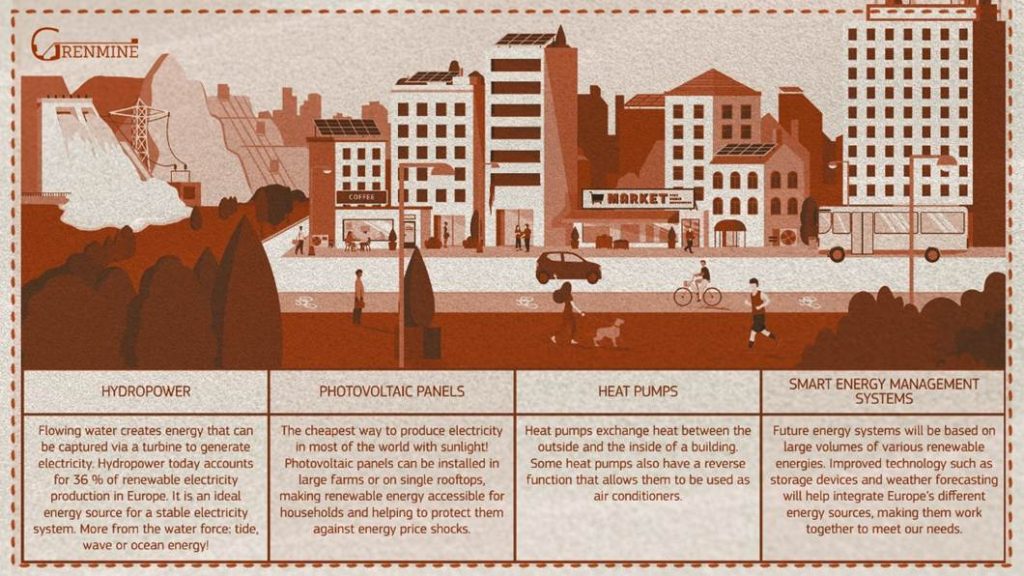
Look again. It is really a picture of timing. Solar panels may produce most power at midday. Residential demand may peak in the evening. Industry follows production cycles. Transport creates its own patterns of electricity use.
The grid has to coordinate it all. This is one of the central challenges of the transition. Renewable generation produces electricity at particular moments. Demand also happens at particular moments.
The two do not automatically meet. That does not make renewable energy unreliable. It makes the surrounding system more important. Sometimes electricity has to move, and sometimes energy itself has to move through time.
Storage gives energy time
Energy storage is often described through technical terms: capacity, duration, efficiency and response time.
Its role can be explained more simply.
- Generation creates energy.
- Grids move it.
- Storage gives it time.
When electricity is available but not immediately needed, storage can preserve part of its value for later. When demand rises, that energy can return to the system.
This is why storage matters in a system with growing shares of renewable generation. There is no single universal storage technology.
Different applications require different solutions. Some respond within seconds. Others balance several hours. Some depend on geography or existing infrastructure.
The real question is not: Which technology wins?
It is: Which combination makes the system work?
What if yesterday’s energy landscapes still have work to do?
GrEnMine explores one part of this wider puzzle: the potential of gravitational energy storage in post-mining areas. The principle is simple.
When electricity is available, energy can be used to raise a mass.
When the system needs electricity later, gravity can help release that stored energy.
The most interesting part may be the location. Post-mining areas are usually discussed through the language of endings. The end of extraction and operations.
Post-mining regions may offer industrial knowledge, technical communities, existing infrastructure and connections developed during an earlier energy era. Not every mine can become an energy storage site, but some industrial landscapes may deserve a second look.
More than storing electricity
The potential benefits of gravitational energy storage go beyond simply charging and discharging.
It may support grid stabilisation by helping shift energy from periods of surplus towards periods of higher demand. It may support renewable integration by making energy available beyond the exact moment in which it was generated. It may contribute to microgrid support and energy resilience.
It may create opportunities for industrial applications that require reliable access to energy. These benefits are connected by one idea, energy becomes more useful when the system has greater control over time.
The transition does not always need a blank page
There is a tendency to imagine the future as something that must be built somewhere else.
A serious energy transition should also ask what can be adapted, reused or given another purpose. Because a place does not lose all its value simply because its original function has ended. The next time you see a renewable energy project, do not stop at the technology.
Ask what sits around it. Where does the electricity go? Where does the energy wait?
Once those questions become visible, the transition starts to look different.
Not like a collection of technologies, but like a system.
Renewables generate.
Grids connect.
Storage gives energy time.
Sometimes, places built for yesterday’s energy system may become part of tomorrow’s.